
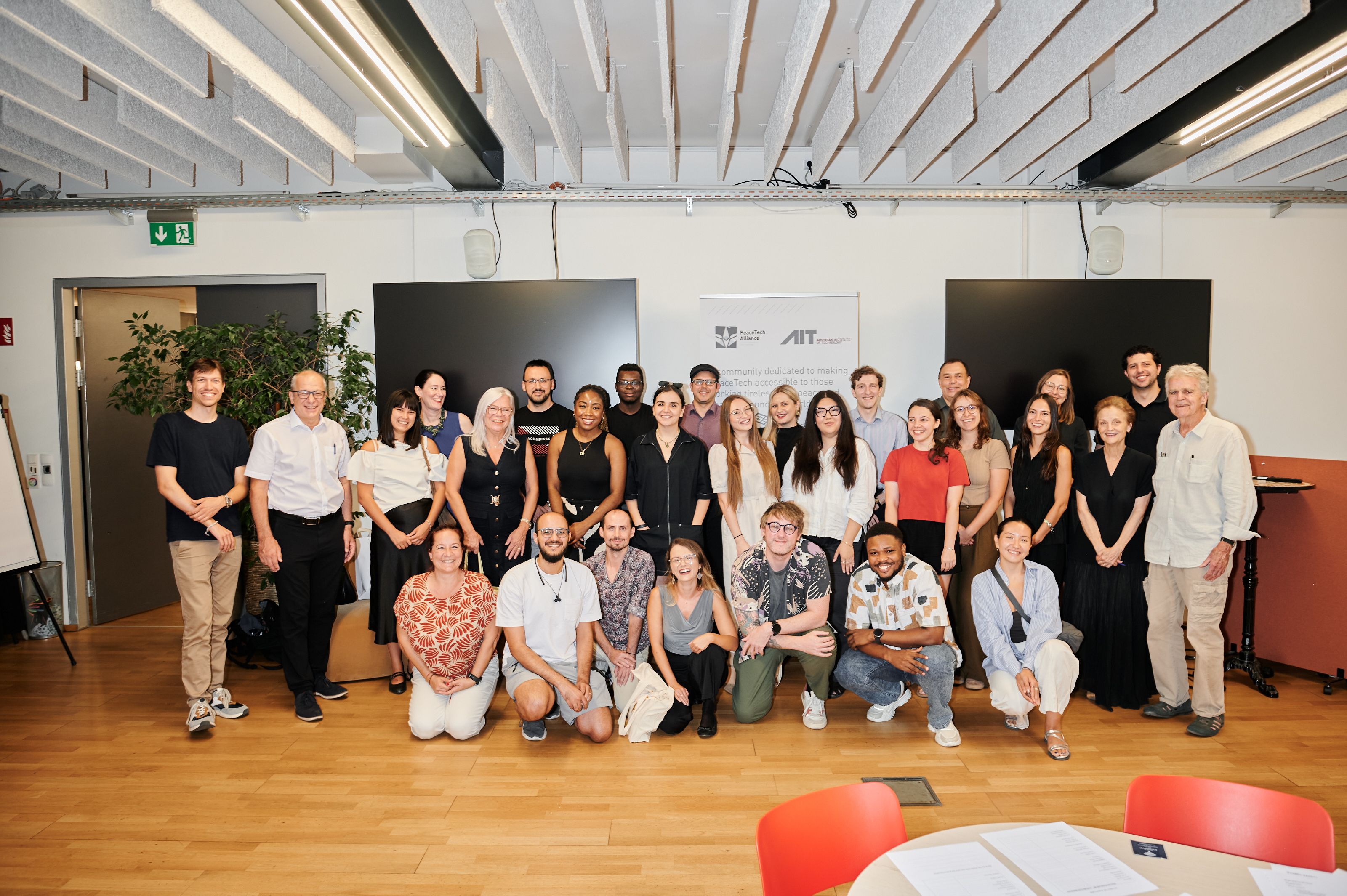
Participants at the PeaceTech Alliance's nuclear disarmament workshop, hosted by the AIT Austrian Institute of Technology on the eve of the 81st anniversary of the atomic bombing of Hiroshima. © Valerie Maltseva
BY Heather Wokusch / ON 14 AUGUST, 2026
On 5 August, the PeaceTech Alliance marked the eve of the anniversary of the atomic bombing of Hiroshima. More than eight decades later, the question remains painfully relevant: what responsibility does innovation have in preventing future catastrophe?
Hosted by the AIT Austrian Institute of Technology, the workshop was led by Heather Wokusch. The workshop's roughly 40 participants came from all walks of life, and most had limited experience with the topic of nuclear weapons.
Rather than starting with the usual facts, figures, or historical accounts, our workshop approached the issue from a different angle: what if we changed the way we talk about security?
The workshop began with a simple exercise. Participants were given 30 words associated with nuclear weapons and asked to choose the three they felt dominated today's conversation.
Two words stood out when participants shared their results in small groups: "war" and "security."
At first glance, this might seem unsurprising. Nuclear weapons are, after all, weapons of war, and discussions about deterrence and national security are central to the debate.
But the exercise encouraged some to pause and question the assumptions behind these words. As one participant noted:
"Does war actually make us more secure? And who benefits when nuclear weapons are primarily discussed through the language of security?"
These questions revealed something important: the words we use do more than describe an issue. They shape how we understand it, and, ultimately, which solutions we can imagine.
If the dominant narrative is about military power and national security, it can be difficult to imagine alternative narratives centred on prevention, human security, cooperation, resilience, or shared responsibility.
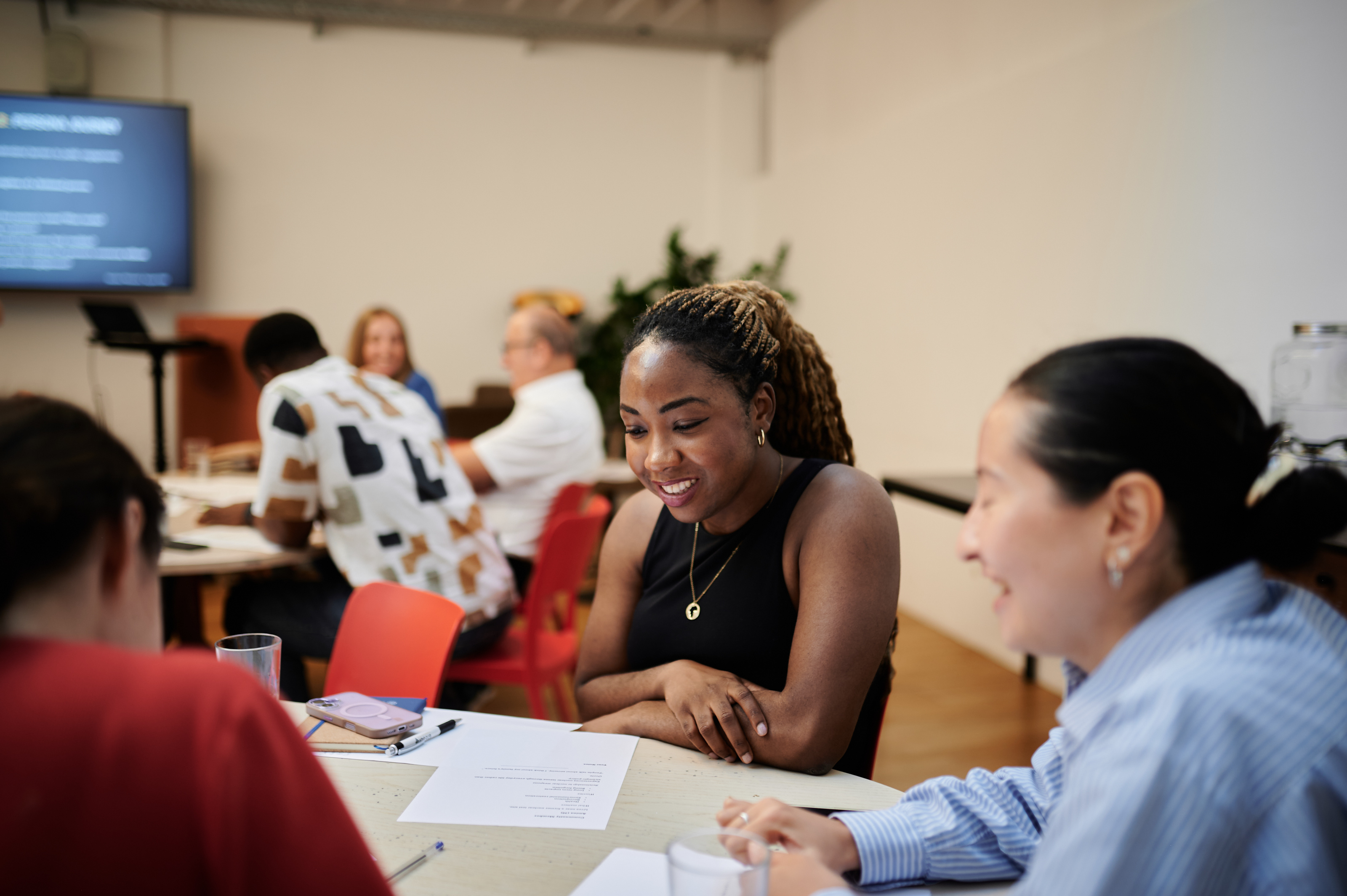
Participants discuss the assumptions behind the words most commonly used to talk about nuclear weapons and security. © Valerie Maltseva
The next challenge was to look at the issue from the perspective of someone who might not normally engage with the topic of nuclear weapons.
Small groups were each assigned a specific persona, such as a military officer, a high school student, an engineer, a climate activist, a journalist, and others. Each group then worked through a human-centred design journey about that persona. This exercise shifted the question from "How do we tell people about nuclear weapons?" to something much more useful: "What would actually make this person care?"
Across the different personas, a common pattern emerged. People are more likely to feel empowered to engage in topics of nuclear security and disarmament when they feel they have relevant information, can connect the issue to challenges they already care about, and feel that their opinion actually matters.
That may sound simple, but it has significant implications. Information alone does not necessarily lead to engagement. If nuclear weapons feel distant, technical, or confined to the pages of history books, people may struggle to see where they fit into the conversation. Relevance and agency matter.
Next, participants zoomed out from individual perspectives to the wider system. Using a traffic-light exercise, participants mapped interconnected risks and explored where innovation might help interrupt cycles of nuclear-risk escalation. The aim was not simply to identify what is going wrong, but to ask: where can we intervene?
In devising solutions, several participants pointed to the role of media, education, institutions, and public dialogue. Better media reporting could help people understand nuclear risk without sensationalism or unnecessary polarisation. Relevant institutions could provide more accessible and unbiased information. And, importantly, engagement should become a two-way conversation rather than a process in which experts simply lecture the public.
Education emerged as another critical intervention point. If young people encounter the concept of nuclear weapons only as something that happened in 1945, it is hardly surprising that the issue can feel distant. Teaching that nuclear risk remains connected to the world we live in today could help create a stronger sense of relevance, and responsibility.
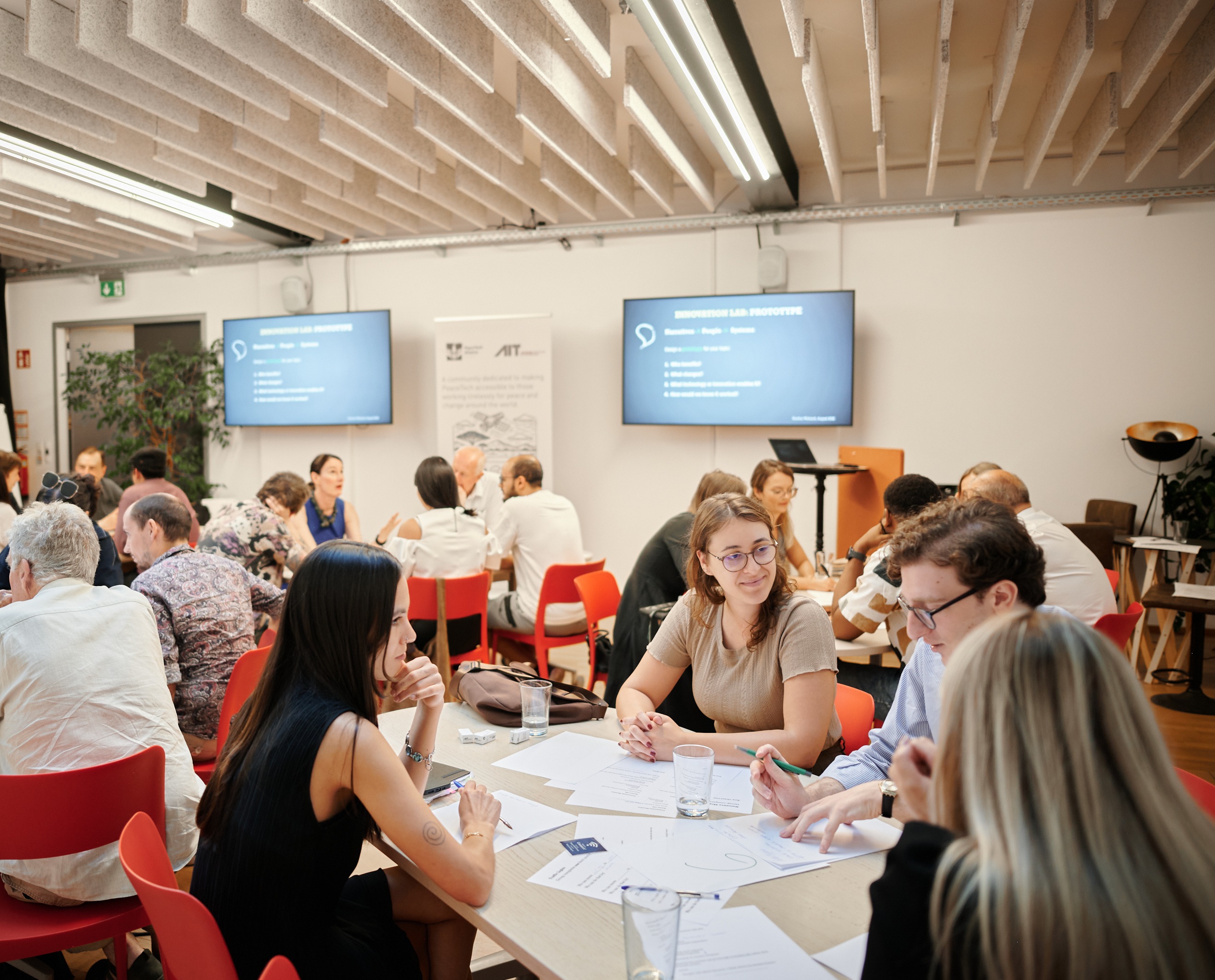
Small groups work through the workshop's design exercises at AIT Austrian Institute of Technology. © Valerie Maltseva
As a final exercise, small groups moved from identifying intervention points to building solution prototypes within topics connected to the broader nuclear nexus; for example, one group focused on PeaceTech while others focused on areas such as climate, global partnerships, and education.
Despite approaching these distinct challenges from different angles, a striking common thread emerged: many of the proposed solutions focused on addressing power imbalances and information inequity. This meant imagining new models of cooperation, not just between governments and institutions, but across communities, demographics, disciplines, sectors, and different forms of expertise.
The exercise reinforced an important point: innovation does not necessarily mean creating a new technology. Sometimes, innovation lies in redesigning relationships, creating better ways for people with different perspectives, knowledge, and levels of power to work together.
Perhaps the most important lesson from the workshop was that changing the narrative is not simply about finding a better slogan. As Heather Wokusch noted:
"Changing the discussion around nuclear weapons, or any contemporary risk, is about changing who gets to participate, what questions are asked, and what possibilities are made visible."
The workshop pointed towards three interconnected opportunities for public engagement on contemporary risks.
Reframe. Move beyond a conversation dominated by war and security. Make space for narratives about prevention, human security, cooperation, and our shared responsibility to avoid catastrophe.
Connect. Link risks to issues people already care about, and provide information that is credible, accessible, and relevant to their lives.
Engage. Create opportunities for genuine dialogue. Give citizens, students, educators, journalists, innovators, and communities a meaningful role in shaping the conversation.
The challenge ahead is significant. But perhaps innovation is not only about inventing new technologies or systems. It can also mean inventing new ways of thinking, communicating, and working together.