
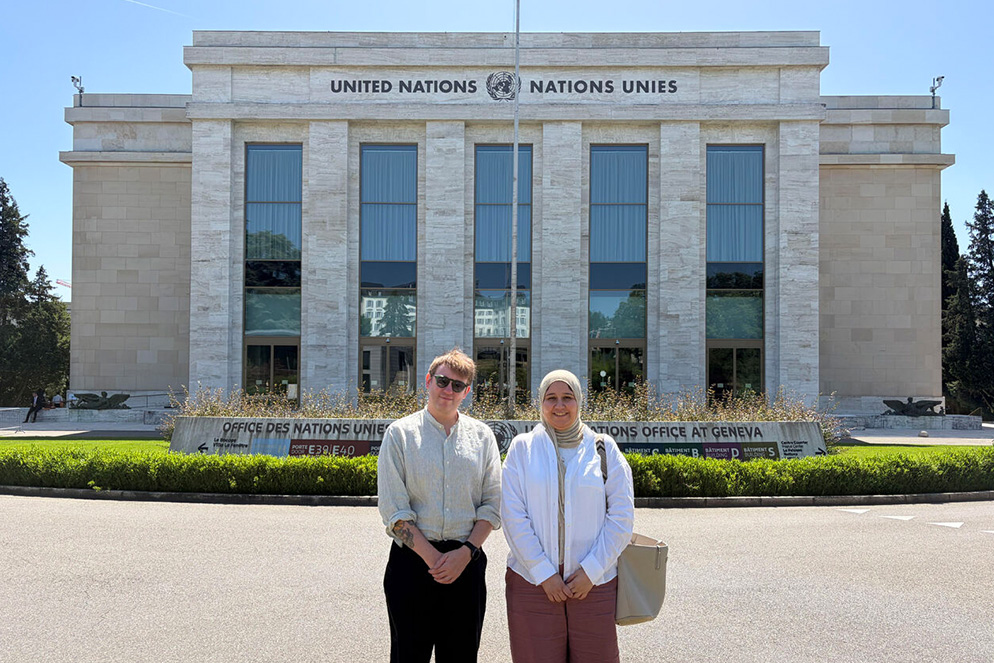
Pictured: Nathan Coyle and Nourhan Moustafa outside the UN building in Geneva.
BY Nathan Coyle / ON 1 JULY, 2026
On 15 June, the PeaceTech Alliance participated in a side event hosted by the United Nations Office for Disarmament Affairs (UNODA) in Geneva exploring the future of artificial intelligence, human control, and emerging technologies for peace.
The event brought together young leaders, researchers, practitioners and international organisations to discuss how new technologies are reshaping peace and security, while considering the governance, accountability and human oversight needed to ensure these technologies support peaceful outcomes.
During the discussion, Nathan Coyle, Senior Expert in PeaceTech at the Austrian Institute of Technology (AIT), reflected on the importance of placing lived experience at the centre of PeaceTech. While artificial intelligence presents significant opportunities to strengthen peacebuilding, he argued that technology cannot be separated from the communities it is intended to serve. Without meaningful engagement with those closest to conflict, PeaceTech risks overlooking the realities that should shape its design.
A key theme throughout the conversation was the importance of maintaining meaningful human control as AI systems become increasingly influential across peace and security. Participants explored how accountability, transparency and responsible governance must evolve alongside technological capability to ensure innovation remains aligned with human values.
The PeaceTech Alliance also highlighted the need to move beyond technology-first approaches and instead develop mechanisms that enable peacebuilders and conflict-affected communities to actively shape the technologies that increasingly influence their work. As AI becomes more embedded within peacebuilding, local knowledge and lived experience will be essential to ensuring these systems are trusted, relevant and effective.
Across the discussion, participants reflected on the opportunities that emerging technologies present, while recognising that their impact will ultimately depend on the choices made during their design, governance and deployment. The conversation reinforced that responsible innovation is not only a technical challenge, but also a social one, requiring collaboration between researchers, policymakers, practitioners and communities.
The panel featured Nourhan Moustafa, Elisabetta Di Biasio, Candy Lindsey-Moyo, Rashida Abbas and Nathan Coyle.
A big thank you to the United Nations Office for Disarmament Affairs and everyone involved in organising the event for creating space for such an important discussion on the future of PeaceTech and responsible artificial intelligence.